01
Five string banjo
Open G tuning, a short drone string that starts at the fifth fret, and two completely different right hands sharing one instrument.
Complete guide
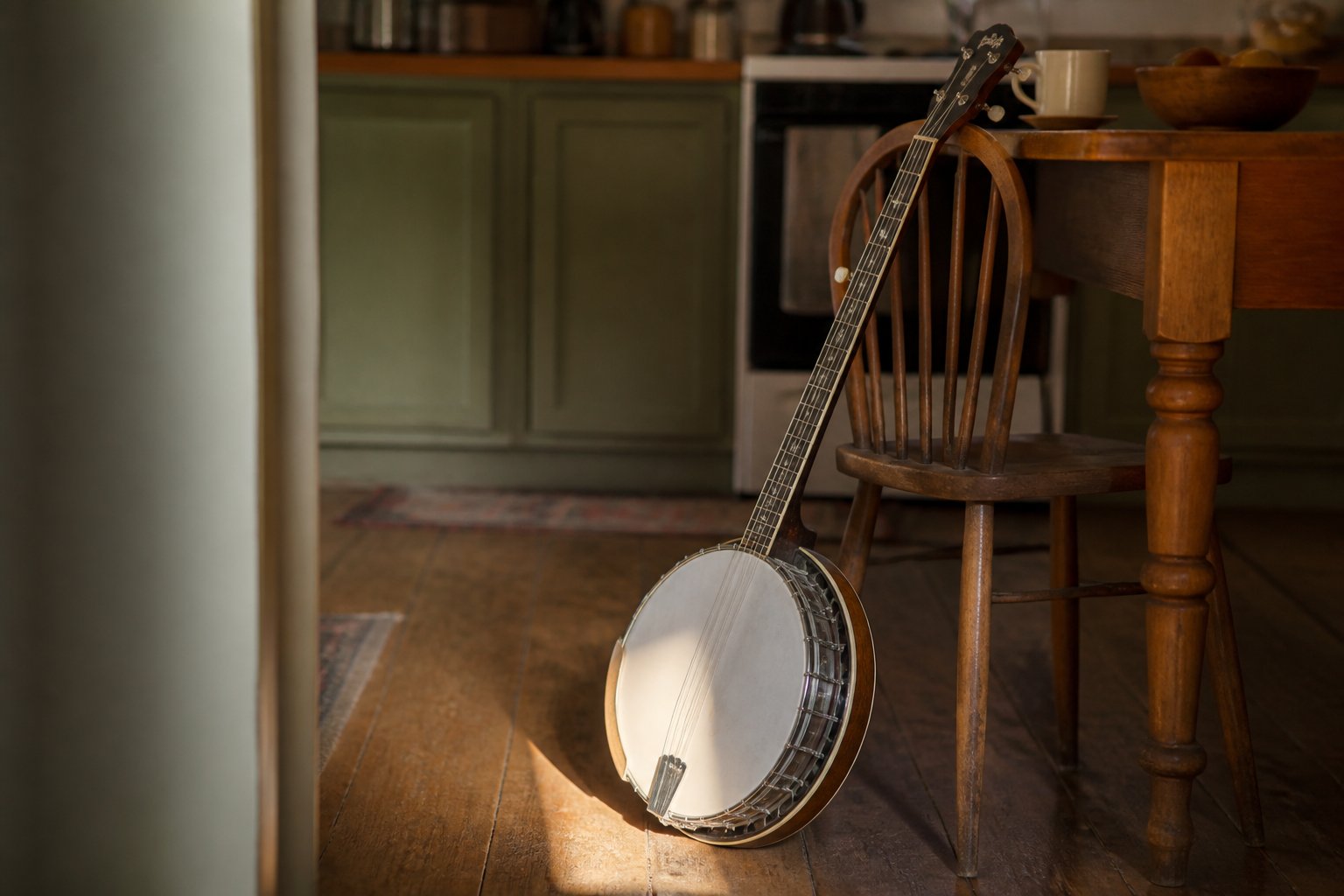
Acoustic roots music, from the ground up
Guides to the banjo, fiddle, mandolin and resonator guitar for people who are still working it out: how the things are tuned, what the right hand is actually doing, what to buy first, and where the festivals land in the year.
Four ways in
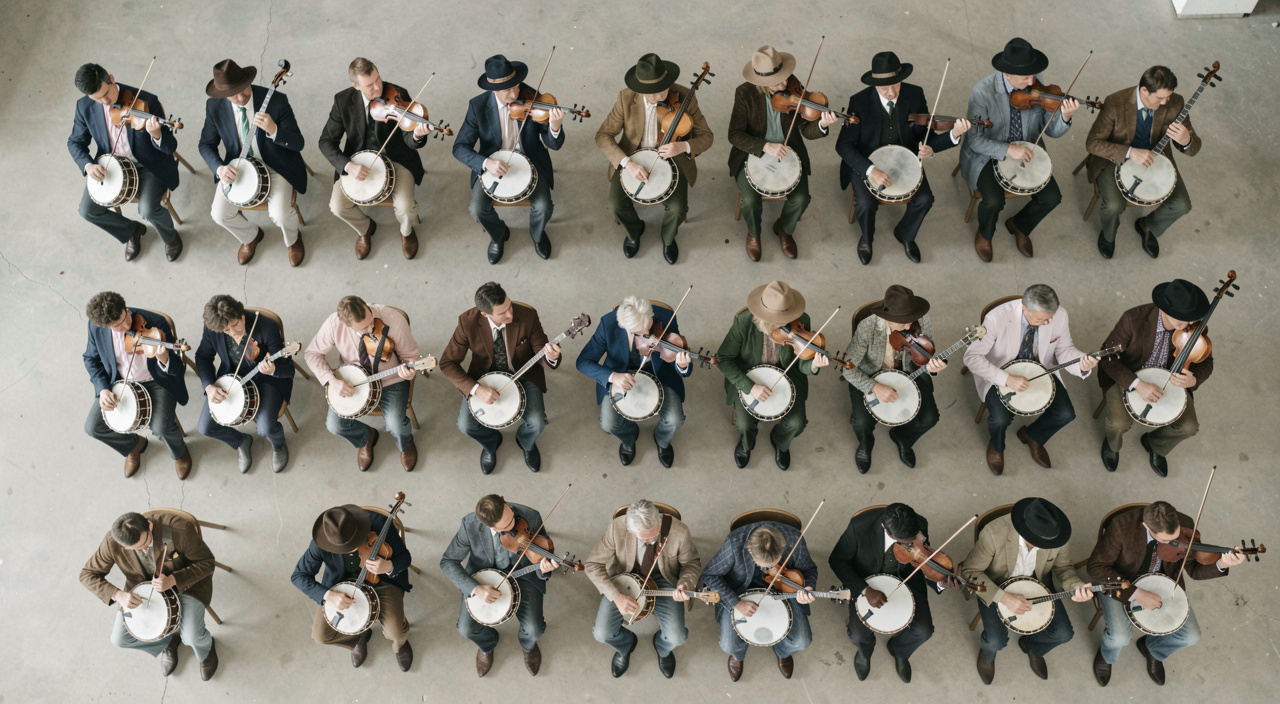
A string band is four or five people covering rhythm, melody and drive at the same time, with nobody keeping time but each other. Each of these pages starts at the beginning: what the instrument is, how it is tuned, and what the first six months look like.
01
Open G tuning, a short drone string that starts at the fifth fret, and two completely different right hands sharing one instrument.
Complete guide
02
The same box as a violin, a different job. Bowing patterns, shuffle rhythms, and why the Irish and Appalachian traditions sound related but never identical.
Complete guide
03
Eight strings in four courses, tuned like a fiddle. The chop chord that holds the backbeat, plus tremolo, closed shapes and string choice.
Complete guide
04
Played flat on the lap with a steel bar and an aluminium cone doing the work. Open G again, slants, and the endless dobro naming confusion.
Complete guide
Read this first
Most people who give up on the banjo give up on an instrument that was flat on the fourth string and sharp on the second. Open G is five notes, the fifth string is the odd one out, and once you can check it by ear in twenty seconds the rest of the instrument stops fighting you.
Our tuning guide covers the standard setup, the four alternate tunings you will meet at a session, how to stop new strings drifting, and what to do when the fretted notes go sharp up the neck.
Technique and theory
Short, practical pieces written for the stage of playing where the questions are embarrassing to ask out loud.
Setup
Open G note by note, the relative method by ear, alternate tunings, and why new strings will not settle.
Fatherhood changes with every stage of a child's life. A Czech magazine, Otcovský kompas, maps what shifts at home, at work, and at the office.
Setup
Open G note by note, the relative method by ear, alternate tunings, and why new strings will not settle.
A personal poetry project: how a haiku collection about the American Civil War works, from small images to source notes and classroom prompts.
Setup
Open G note by note, the relative method by ear, alternate tunings, and why new strings will not settle.
9 min read
Right hand
Two traditions, one instrument. What each hand physically does, what each one sounds like, and which to learn first.
8 min read
Notation
Five lines, finger marks under the notes, and the timing information that tab quietly leaves out.
7 min read
Kit
Why a normal capo only solves four fifths of the job, and the three fixes: spikes, a sliding capo, or retuning.
6 min read
Guitar
Bass runs, alternating picking, and how the guitar keeps a whole band honest without ever playing the tune.
8 min read
Etiquette
The circle, the nod, the key, the tempo, and the six unwritten rules that keep everyone welcome.
7 min read
Campaigns
The Be On Our Side transit poster campaign, where it started, what the posters said, and the counter-ads that answered pro-Palestinian subway posters in 2011.
6 min read
Youth work
Building a youth group that keeps teenagers, leading small group Bible study, and the volunteer and event planning that keeps a small church ministry running.
7 min read
Writing
A plain guide to picture-book structure, word counts by age band, revision passes, and how a children's manuscript reaches an agent in the Carolinas.
7 min read
School sport
When bowling, track and field and golf seasons start in US high schools, how tryouts work, and what a Baker format match or a meet day looks like.
7 min read
Civic life
How Masonic lodge officers are chosen, what happens at a meeting, and how to read a trestleboard, written plainly for anyone curious about the lodge.
6 min read
Tackle
A field note on wooden surfcasting plugs: the main lure families, how to read surf and current, and the density, wiring and sealing that decide how one swims.
6 min read
Photography
How to read an agency brief, build a portfolio an editor can read, and handle consent and licensing for published images.
7 min read
Models
A practical notebook on finished scale models: picking kits, inspecting a box before you buy, and the cases, depth and light that keep them presentable.
7 min read
Broadcasting
A plain guide to microphone distance, studio wiring, FM stereo, AM night propagation, loudness in LUFS and the copyright rules behind what you hear.
6 min read
Church life
What happens at an evangelical Sunday gathering: the shape of the service, the breaking of bread, and how a sermon differs from a Bible study.
7 min read
Dress
How to search the Scottish tartan register by name and by region, how to read a threadcount, and how to pick a clan pattern without guessing.
7 min read
Study
A learner's notes on preparing Spanish in Valladolid: course levels and the DELE exam, where to live in the city, and Castile and Leon trips worth planning.
7 min read
Table
How to build a food gift that holds up: hamper ratios, cheese board portions, honey and olive oil labels, wrapping and quantities for a crowd.
7 min read
Gear, judged on how it plays
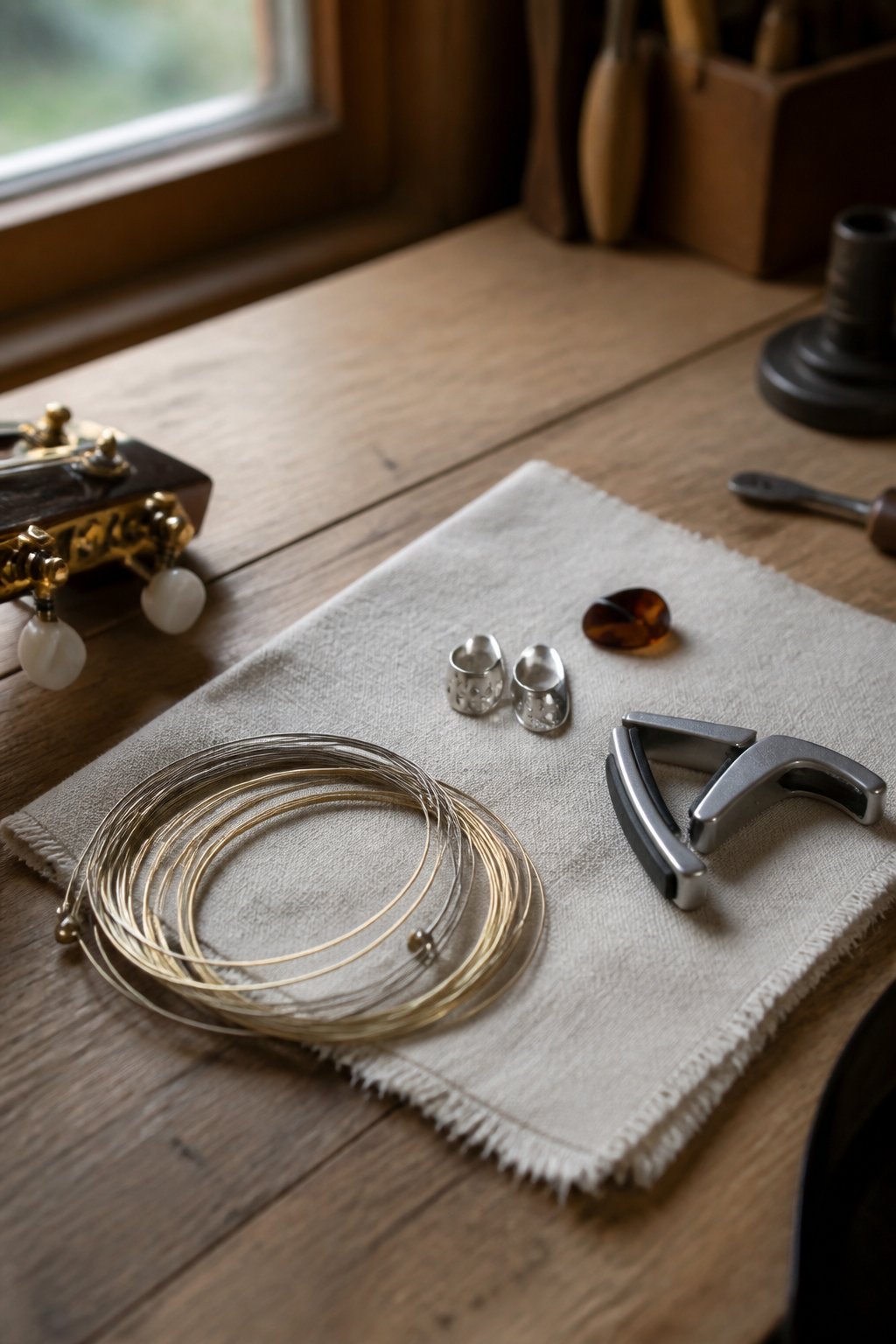
We write about instruments the way players talk about them across a workbench, which makes the unpopular part easy to say out loud: a decent setup on a modest instrument beats an expensive one that nobody has adjusted, and strings are the cheapest upgrade you will ever make.
The diary
The bluegrass and old time circuit in Ireland and Britain runs on a handful of long standing weekends, most of them built around campsites, workshops and car park jams rather than big stages.
| Weekend | Where | Usually | Shape of it |
|---|---|---|---|
| Sore Fingers Summer School | Oxfordshire, England | Easter | A week of tutored classes rather than a stage festival |
| Westport Festival of Music | County Mayo, Ireland | Early summer | Folk and bluegrass across pub venues in the town |
| Athy Bluegrass Festival | County Kildare, Ireland | Midsummer | Long running Irish bluegrass weekend with camping |
| Omagh Bluegrass Festival | County Tyrone, Northern Ireland | Early September | The largest gathering on the island, folk park setting |
| Didmarton Bluegrass Festival | Gloucestershire, England | Early September | Field, campsite and a famously busy jam tent |
The American diary this circuit copies is shaped differently. Over there the summer hinges on one fixed civic date rather than on a bank holiday, and a string band's biggest paid day of the year is often the morning of the Fourth, playing off the back of a flatbed. If you have never seen how those bookings are organised, a county-level account of small-town Independence Day parades in Pennsylvania explains the running order, the marshal and the two-hour window a band actually gets. It is the closest thing American old time has to Omagh.
For readers who want the background rather than the argument, the Western Slope Faith Journal keeps an independent editorial notebook on Baptist history, Bible study methods and church life in western Colorado, where baptist baptism by immersion explained sits beside plain accounts of how congregations actually work.
For the dry hillsides where a weekend of old time music sometimes leads, The Umbel Journal keeps a field notebook on wild buckwheats and the bees and hummingbirds that work them in late summer.
For anyone who keeps a shelf of picture books beside the banjo, Día and children's books covers the April 30 celebration, bilingual titles and small library events, all in plain English.
Away from the fretboard, church life in Macon, Georgia gets the same plain treatment in The Pierce Avenue Journal, a magazine on Lutheran worship, congregation families and the food and clothing pantry work around central Georgia.
For a plain account of how a Catholic scout troop is run in Italy, from the legge e promessa scout through tents, knots and cooking on a fire to leader training and parish links, this Italian guide sets it out branch by branch.
Away from the strings, there is a quieter kind of making: crochet for charity covers chemo caps, preemie hats and pet mats, alongside stitches, gauge and free patterns for beginners and returning hands.
For anyone who has ever sat through a rainy festival weekend and wondered what else a small town hall can hold, the repertory notebook keeps plain notes on Double Indemnity, American film noir, cornerstone and on the volunteer work of running a film club.
The house rules
Everything here is written from the learner's side of the problem, because that is where we are standing. If a technique took us a year to understand, the page says so.
Instruments, string sets and festival weekends are judged on how they play, how they hold up and what they cost, and a page will point you at the cheaper option whenever the cheaper option is the better one.
Tradition is argued about for a living. Where players disagree, we say who disagrees and why, rather than picking a winner and pretending it is settled.